
Cu Chi tunnels history begins with shelter
Cu Chi tunnels history developed across the First and Second Indochina Wars. The account submitted to the UNESCO Tentative List dates early shelters to 1946 and substantial linking of the tunnels to 1961 to 1965. Those stages matter: the system was developed over time, rather than created as a single finished underground structure. Thinking in terms of connected shelters also helps explain its relationship with the people living above it.
The tunnels provided protection, communication, supplies and spaces for daily life for civilians and resistance forces. Their history includes meetings, storage, cooking and treatment, alongside the military purposes often emphasised in short descriptions. A visit becomes more meaningful when these everyday functions are considered together, rather than measuring the experience only by the passage entered underground.
Underground architecture and connected rooms
The tunnels are human-made structures, with passages connecting rooms used for different purposes. Kitchens, meeting rooms, stores and treatment spaces describe a system of life and organisation beneath the surface. The relationship between a connecting passage and a room is as important as the narrow entrance that often attracts attention in photographs. These were spaces with functions, not a natural cave formation.
Their historical scale should be distinguished from the current visitor route. The Tentative List submission describes the difficulty of reconstructing the total network and places it on the scale of several hundred kilometres. That is a historical estimate for a wider system. It does not describe a walk available today, nor does a preserved total tell you how far your own visit will go underground. Keep the questions of wartime extent and present access separate.
A guided history visit
This Ben Dinh visit has an English-speaking guide, with entry depending on the option.
Hand-picked tours, booked through GetYourGuide. Prices are indicative starting prices in US dollars (as of October 2026). Tap a tour for live availability and the current price in your currency.
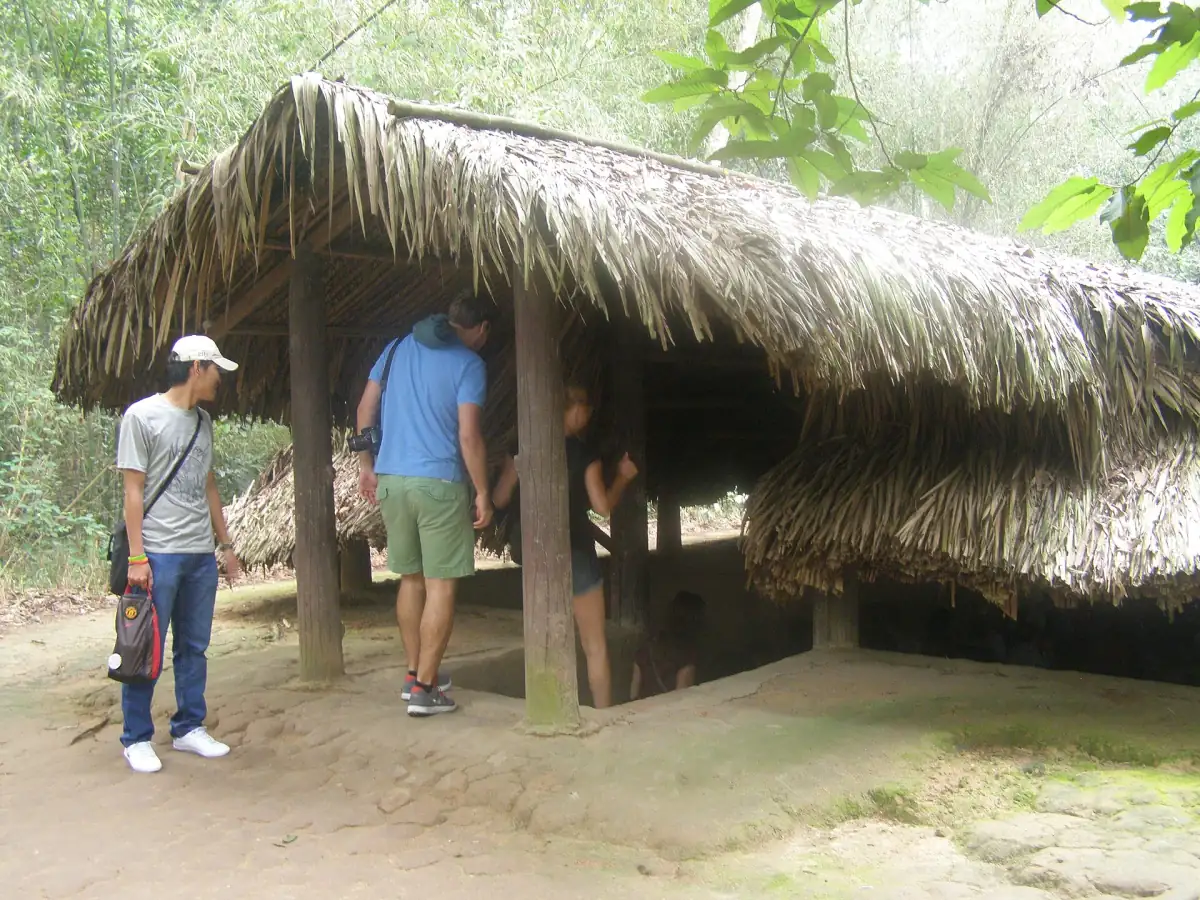
A guided approach to the historical site
Historical explanation at Ben Dinh, with a planned veteran conversation subject to availability and admission according to the option.
Historical kitchens and everyday food
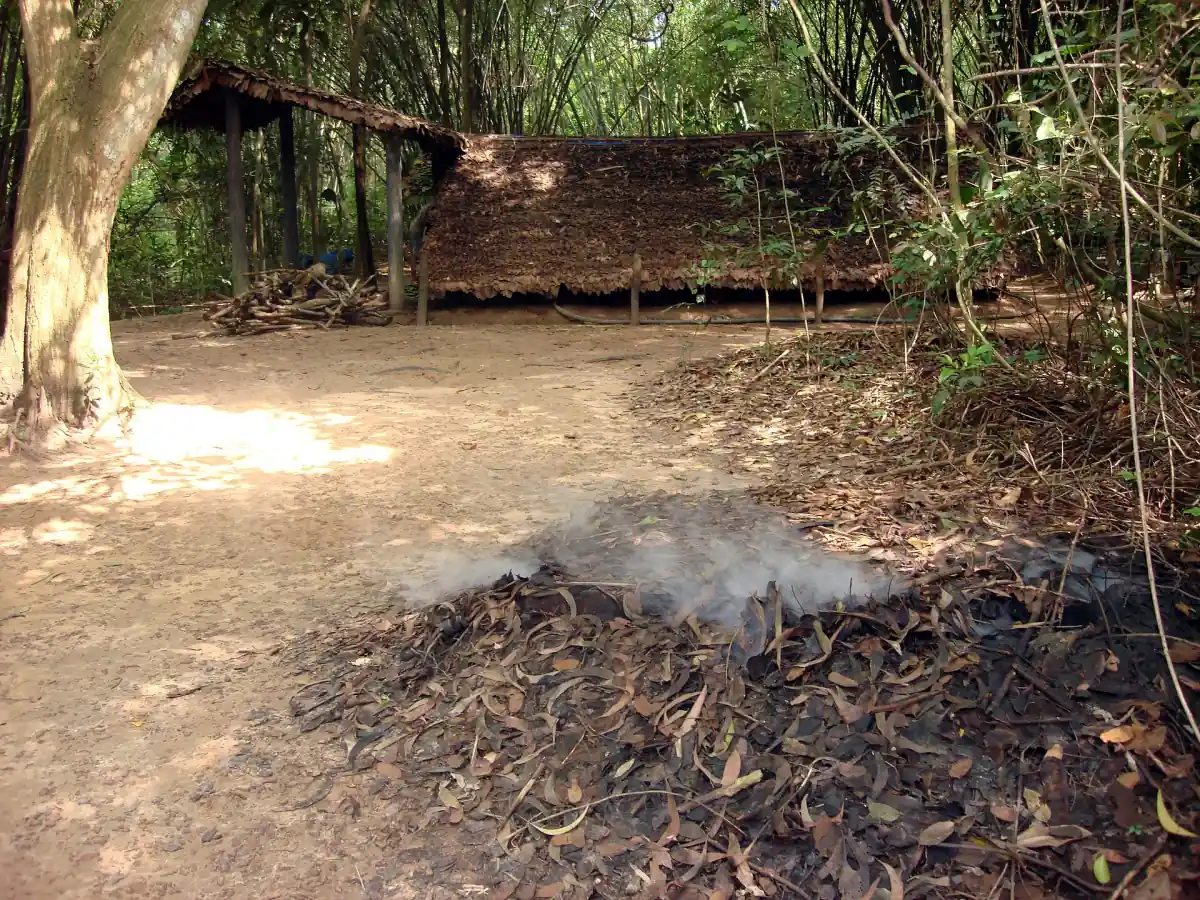
The Hoàng Cầm kitchen offers a way to consider the practical side of survival. Cooking, supplying food and concealing activity belong within the history of the underground system, alongside weapons and command rooms. The photograph of smoke from a concealed chimney directs attention to the relationship between a kitchen and the surface above it. It illustrates a historical feature rather than an activity offered to visitors.
Cassava also appears in the interpretation of life at Cu Chi. An institutional visit on 21 March 2026 recorded cassava served with sesame salt, together with the Hoàng Cầm kitchen and other displays. A tasting can help introduce questions about daily food, but it should be understood within the programme that offers it. It is a different experience from studying how an underground kitchen functioned, and neither should be described as a cooking course.
Ben Dinh and Ben Duoc tell different parts of the story
Ben Dinh was the location of the Cu Chi district committee. Its visitor interpretation includes a documentary film, a weapons workshop and an M41 tank wreck, as well as the tunnels. These displays place the underground visit beside other evidence of the wartime setting.
Ben Duoc was associated with the regional leadership and the military command of Saigon, Cholon and Gia Dinh. Its visitor areas include storage, weapons and operations rooms, a reconstruction area and the memorial temple. These are separate sites, so their displays should not be combined into a single guaranteed itinerary. Decide which part of the history you want to explore and allow the selected site to shape the visit.
Preservation and the present visitor experience
Today, the experience involves preserved underground structures and interpretation for visitors. Widened passages can still be low, hot, dark and narrow. A modern visitor's short passage through such a space can make its physical constraints apparent, but it remains distinct from living and working within the wartime system. The whole visitor route should not be presented as untouched original fabric.
A guided Ben Dinh programme offers historical explanation and a planned veteran conversation, subject to the veteran's availability. Entrance is included only with the appropriate option, while meals are extra. This is one way to approach the site through discussion. Visitors who prefer to stay above ground can ask how the selected programme handles that choice. Preparing with the admission and visit guide helps keep practical decisions separate from the historical narrative.
Remembrance and the UNESCO status
The Ben Duoc memorial temple remembers civilians and combatants killed in the Saigon, Cholon and Gia Dinh area during the wars. Approach it as a place of remembrance, allowing space for those taking part in commemorative activities. An account of an institutional visit on 21 March 2026 records incense and remembrance ceremonies. Visitors can observe respectfully without treating participation in a ritual as a required part of their own visit.
Cu Chi was placed on the UNESCO Tentative List on 15 July 2026. This is a proposal stage, rather than inscription on the World Heritage List. The submission provides a historical account and context for preservation; it should be read with its status in mind. The surviving places, their interpretation and the memorial together offer different ways of considering a history that extends beyond a tunnel photograph.
Continue planning your visit
Compare the sites
Read about the rooms, reconstruction area and memorial at Ben Duoc.
Plan the journey
Choose the entrance first, then arrange the outward and return journey.
Choose a guided format
Compare guided visits by transport and the services included.
Questions about your visit
When did the tunnels develop?
The Tentative List submission dates early shelters to 1946 and major linking to 1961 to 1965, across the two Indochina Wars.
Are the tunnels a World Heritage Site?
Cu Chi entered the UNESCO Tentative List on 15 July 2026. Tentative listing is a proposal stage and differs from World Heritage inscription.
Does the historical network describe the visitor route?
The historical network and the present visitor route are different things. A network-wide estimate does not describe the distance available during a visit.